



Anthropic Launches Claude Sonnet 5.5 With Faster, Cheaper AI Performance
Claude Sonnet 5.5 delivers faster responses and lower task costs while improving agentic coding, knowledge work, visual reasoning and computer-use capabilities, giving developers a more efficient...

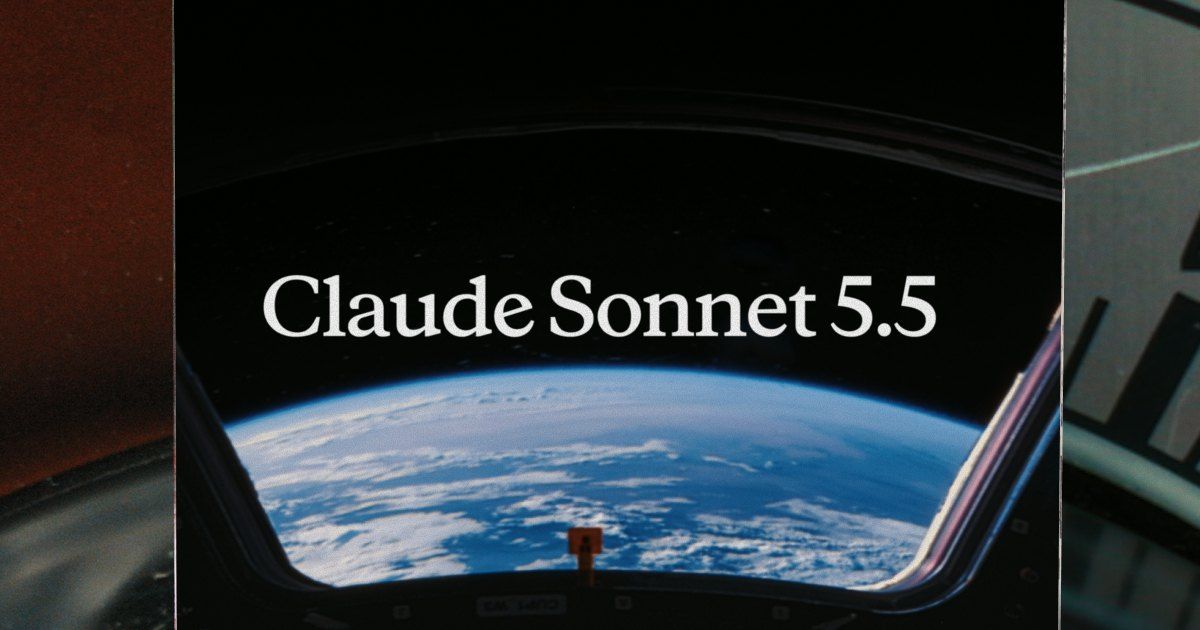
Anthropic has introduced Claude Sonnet 5.5, a new model designed to deliver stronger performance while being faster and more cost-efficient than its predecessor.
According to the announcement, Sonnet 5.5 runs more than 30% faster than Sonnet 5 and can cost up to 30% less per task. Anthropic is pricing the model at $2 per million input tokens and $10 per million output tokens, making it particularly relevant for developers running AI workloads at scale.
One of the biggest improvements comes in agentic coding. Sonnet 5.5 reportedly achieves 70.6% on Terminal-Bench 4.0, demonstrating stronger performance on tasks where AI agents need to interact with software environments, execute commands and complete multi-step programming workflows.
Anthropic also says the model approaches Opus-level performance on several knowledge-work tasks while improving capabilities involving visual understanding and computer use. This makes Sonnet 5.5 suitable for workflows that go beyond conventional chat, including software development, research, document processing and AI agents operating digital interfaces.
The model is available through Claude.ai and Anthropic’s API, giving both individual users and developers access to the new capabilities.
Sonnet 5.5 arrives shortly after Anthropic’s latest Opus release, creating a broader model lineup for different workloads. The company also says Haiku 5.5 is coming for applications that require high-volume, lower-latency AI processing.
For businesses, the combination of speed, capability and lower task costs could make AI agents more practical to deploy across repetitive workflows.
Akash Takes: The important story isn’t simply that Sonnet 5.5 is faster. Anthropic is pushing AI models toward useful, persistent work rather than one-off answers. Better coding, computer use and lower operating costs could accelerate the adoption of AI agents across software development, automation and business operations.